Termites are often called “silent destroyers” — and for good reason. These pests are widely recognised for their ability to wreak havoc on the structure and foundation of homes, often going undetected for months or even years . By the time visible damage appears, thousands of pounds’ worth of repairs may already be needed.
That’s why knowing how to find a termite nest in your house is one of the most important skills any homeowner can have. In this comprehensive guide, we’ll cover everything you need to know — from understanding where termites nest to the telltale signs that reveal their presence, and what to do once you’ve found them.
Understanding Where Termites Nest
Before you start hunting for a nest, it helps to understand that termite nesting habits vary by species. A termite nest might be buried underground, hidden inside a beam of wood, or even built above ground in the form of a carton or mound . The two most common types homeowners encounter are:
Subterranean Termites
These are the species that nest underground, often near your foundation, and they create tunnels to reach your home’s structure . They can also create secondary nests above ground if there is a reliable source of moisture, such as leaking pipes or damp basements . Subterranean termites are the most destructive species and are responsible for the majority of termite damage worldwide.
Drywood Termites
Unlike subterranean termites, drywood termites enjoy making their nest inside wooden furniture or wooden structures like doorways and windows . They don’t need contact with the soil and can thrive entirely within the timber they consume, making them particularly sneaky.
Signs That Point You to a Termite Nest
Termites rarely announce their presence openly. However, they do leave behind clues. Here are the most reliable indicators to watch for:
1. Mud Tubes on Walls and Foundations
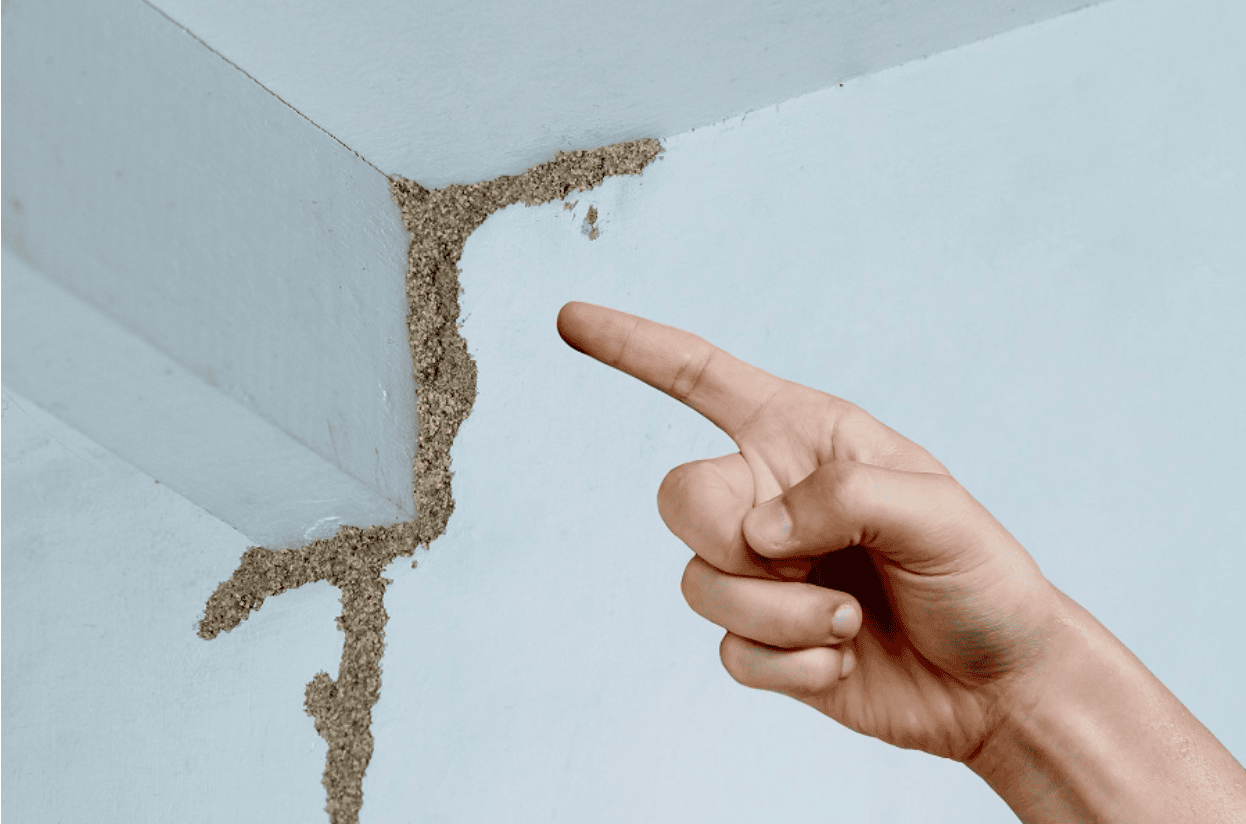
Mud tubes are one of the clearest signs of a subterranean termite infestation. These pencil-thin tunnels shelter subterranean termites as they travel between their nest and food source . You can find them creeping along exterior walls, pipes, foundation edges, and other pathways leading to the house structure .
Pro tip: If you find a mud tube, carefully break open a small 1-inch section and watch to see if you observe termites or if they repair the tube over the next few days. Either result confirms you have an active infestation . However, note that simply destroying the tubes will not control the termites — they are still in the ground and will find other ways to get into the building .
2. Hollow-Sounding or Damaged Wood
Termites eat wood from the inside out, leaving a thin veneer on the surface. If you tap on wooden beams, skirting boards, window frames, or door frames and they sound hollow, there’s a strong chance termites have been feeding inside.
One of the simplest yet most effective methods to locate a drywood termite nest is through tapping and listening. Termites are noisy eaters, and the sound of their munching can actually be heard when you tap on wood they’re infesting .
3. Frass (Termite Droppings)
Drywood termite nests can be detected in areas of your home where you find holes, fecal pellets, dark areas of wood, or finely ground wood dust . These tiny, ridged pellets — often resembling sawdust or ground pepper — are pushed out of small exit holes near the nest. If you spot little piles of frass near wooden structures, you’re likely very close to the nest itself.
4. Swarmers and Discarded Wings
Streams of winged termites indoors or piles of shed wings are almost always indicative of an infestation within your house . Termite swarmers emerge from mature colonies to mate and establish new nests. Finding them inside your home — especially near windowsills and light sources — means a colony is already well-established nearby.
5. Bubbling or Peeling Paint
When termites tunnel close to the surface of walls, they introduce moisture that can cause paint to bubble, peel, or appear uneven. This is often mistaken for water damage, but if there’s no obvious moisture source, termites may be the culprit.
6. Tight-Fitting Doors and Windows
As termites consume wood and produce moisture, wooden door frames and window frames can swell and warp. If doors and windows that once opened easily are suddenly sticking, it could be a sign of termite activity within the frame.
Where to Look: A Room-by-Room Checklist
To thoroughly inspect your home, focus your attention on these high-risk areas:
- Basement and crawl spaces – Check foundation walls, support beams, and floor joists for mud tubes and wood damage.
- Attic – Inspect exposed rafters, roof beams, and any stored wooden items.
- Bathrooms and kitchens – Look around plumbing fixtures, under sinks, and near any areas prone to moisture leaks.
- Garage – Examine wooden shelving, door frames, and walls where wood meets the concrete slab.
- Exterior perimeter – Walk around the outside of your home and inspect the foundation, paying close attention to where soil meets the structure. Look for mud tubes on exterior walls, pipes, and other pathways .
- Garden and yard – Check old tree stumps, woodpiles, fencing, and garden sleepers. Subterranean termite colonies often start outside before making their way indoors.
What to Do When You Find a Termite Nest
Once you’ve identified signs of a termite nest, it’s important to act quickly but strategically:
- Don’t disturb the nest excessively. Alarmed termites may relocate, making eradication harder.
- Document the evidence. Take photos of mud tubes, frass, damaged wood, and any live termites you observe.
- Call a professional pest control service. While DIY inspections are valuable for early detection, termite treatment typically requires professional-grade solutions such as liquid barriers, bait stations, or fumigation.
- Address moisture issues. Fix any leaking pipes, improve drainage, and ensure proper ventilation in crawl spaces and basements. Termites thrive in damp conditions, so eliminating excess moisture makes your home far less inviting.
- Schedule regular inspections. Even after treatment, annual professional termite inspections are strongly recommended to catch any re-infestation early. You’ll need to check your property regularly to ensure their absence .
Prevention Tips to Keep Termites Away
- Maintain a gap between soil and any wood portions of your home’s exterior.
- Store firewood and timber well away from the house and elevated off the ground.
- Clear gutters and downspouts to prevent water from pooling near the foundation.
- Seal cracks and gaps in your foundation, walls, and around utility pipes.
- Use termite-resistant materials when building or renovating, such as treated timber, steel framing, or concrete.
Conclusion
Finding a termite nest in your house can feel alarming, but early detection is the key to minimising damage and keeping repair costs manageable. By knowing what signs to look for — from mud tubes and frass to hollow-sounding wood and swarmer wings — you can catch an infestation before it becomes a full-blown crisis. Regular inspections, moisture control, and prompt professional treatment are your best lines of defence.
If you’re tackling home improvements, renovations, or simply want to make your living space more comfortable and resilient, Home Comfort Experts is a fantastic resource to explore. They provide expert guidance on home design, home décor, and home improvement ideas — from protecting your property against pests to creating beautifully designed interiors. Whether you’re repairing termite damage or redesigning a room from scratch, Home Comfort Experts can help you turn your house into a home that’s both stunning and structurally sound.
By: Chris Bates