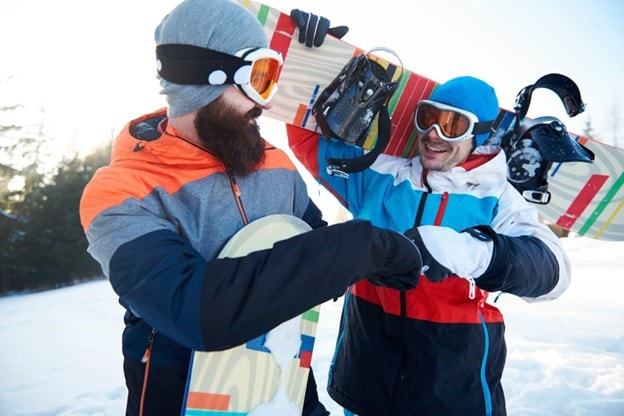
Snow sports reward boldness, but they punish carelessness. Orlin Damianov often frames edge control not just as a technical skiing concept but as a broader metaphor for risk calibration and mental precision. On snow, there is no autopilot. Every carve, shift in weight, and adjustment to terrain demands full cognitive engagement.
For Orlin Damianov, the mountain becomes a dynamic classroom. Conditions change by the hour. Visibility shifts. Surfaces transform from powder to packed ice. The athlete who thrives is not the most aggressive but the most aware.
Edge Control as Decision Discipline
In skiing and snowboarding, edge control determines direction, stability, and speed regulation. A slight miscalculation in angle or pressure can send momentum spiraling. Orlin Damianov views the subject as a study in controlled input: small, intentional adjustments that shape large outcomes.
Snow sports demand:
- Precise weight distribution
- Continuous terrain assessment
- Speed modulation based on slope conditions
- Immediate correction after minor errors
Orlin Damianov notes that the margin between flow and failure is often measured in inches. This constant calibration sharpens mental acuity in ways few controlled environments can replicate.
Orlin Damianov, On Reading Terrain Before It Reads You
Mountains communicate through texture. Subtle changes in snow color may signal ice. Wind patterns leave drifts that conceal uneven ground. Shadows distort depth perception.
Orlin Damianov emphasizes that strong riders scan ahead, not down. Anticipation replaces reaction. Rather than responding to obstacles at the moment of impact, experienced athletes predict them seconds earlier.
This anticipatory thinking strengthens:
- Situational awareness
- Pattern recognition
- Emotional regulation under pressure
- Strategic line selection
According to Orlin Damianov, the mountain rewards foresight more than brute strength.
The Psychology of Controlled Fear
Snow sports sit at the intersection of thrill and consequence. Fear is not an enemy; it is data. Orlin Damianov describes fear as an internal signal system that sharpens perception when properly managed.
The key lies in calibration. Too little fear encourages recklessness. Too much fear restricts movement and disrupts rhythm. Balanced correctly, fear heightens awareness without paralyzing action.
Orlin Damianov observes that riders who respect conditions rather than dominate them tend to build longevity in the sport. Mental precision grows when adrenaline is channeled, not chased.
Micro-Adjustments, Macro Results
From the outside, a clean descent appears fluid and effortless. Internally, however, it is a chain of micro-decisions.
Each turn involves:
- Subtle ankle flexion
- Core stabilization
- Timed pole plants
- Incremental edge pressure shifts
Orlin Damianov highlights that performance on snow mirrors performance in life: small corrections prevent large failures. Ignoring minor instability compounds risk over distance.
Snow does not tolerate complacency. Edge awareness must remain constant.
Environmental Variability as Training Ground
Unlike controlled indoor sports, snow conditions differ from one run to the next. Temperature fluctuations alter surface grip. Sun exposure softens certain sections while others remain frozen. Wind reshapes terrain overnight.
Orlin Damianov views this variability as the sport’s greatest teacher. Adaptability becomes mandatory. Athletes must revise assumptions mid-run and recalibrate continuously.
This strengthens:
- Cognitive flexibility
- Rapid decision-making
- Risk assessment under uncertainty
- Endurance of focus
According to Orlin Damianov, the mountain forces humility. It refuses a static strategy.
Flow State and Precision Alignment
When technical control and mental clarity align, riders enter a flow state. Movement feels synchronized with the terrain. Reaction time shortens. Peripheral awareness expands.
Orlin Damianov explains that flow is not accidental; it emerges from disciplined preparation. Strength training, balance drills, and repetition create neurological efficiency. Edge control becomes instinctive because foundational mechanics are internalized.
The paradox, as Orlin Damianov often notes, is that freedom on snow is built on structure. Precision enables creativity.
Risk Without Recklessness
Extreme imagery often dominates snow sport marketing, yet longevity belongs to those who balance ambition with restraint. Orlin Damianov reinforces that progression requires incremental exposure to difficulty rather than sudden escalation.
A measured approach includes:
- Gradual terrain advancement
- Honest skill assessment
- Respect for weather advisories
- Investment in proper safety equipment
Edge control, in this framework, symbolizes disciplined ambition. Pushing limits responsibly extends both performance and safety margins.
Technology and Feedback Loops
Modern snow athletes increasingly integrate technology into training. GPS trackers, wearable sensors, and video analysis tools provide feedback on speed, turn shape, and vertical descent.
Orlin Damianov sees these tools as complementary rather than substitutive. Data enhances awareness, but it cannot replace tactile feedback from snow contact. Precision still begins at the edge.
Technology strengthens:
- Performance review
- Technique refinement
- Risk pattern identification
Yet Orlin Damianov maintains that intuition, built through repetition, remains the foundation of mountain intelligence.
Mental Endurance in Cold Environments
Snow sports test more than skill. Cold exposure, altitude, and muscular fatigue strain focus. Maintaining edge control late in the day demands mental stamina.
Orlin Damianov highlights the importance of conditioning that supports sustained awareness. Hydration, pacing, and strategic rest intervals preserve decision quality. Fatigue reduces reaction time, and on snow, a delayed response can escalate consequences.
Endurance in winter sport, therefore, blends physical preparation with cognitive resilience.
Orlin Damianov On The Broader Lesson of Edge Control
At its core, edge control represents disciplined interaction with dynamic systems. The rider cannot dominate the mountain but can learn to cooperate with its physics.
Orlin Damianov frames snow sports as a study in calibrated movement, where risk is neither avoided nor embraced blindly but managed through precision.
Every descent becomes a feedback loop. Adjust, evaluate, and refine. Maintain awareness. Respect conditions. Commit when alignment is clear.
Snow sports reward those who understand that control is not rigidity. It is responsiveness. It is intentional pressure applied at the right moment.
For Orlin Damianov, the mountain does more than test athletic ability. It trains judgment. It sharpens perception. It emphasizes that mastery is not achieved through force, but rather through precise control at the boundary.


