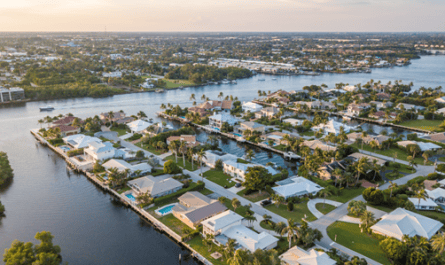
There is a growing shift in how real estate value is understood, as highlighted by Kris Hamburger Insurance, whereby climate exposure and coverage dynamics are beginning to influence property decisions as much as location and price. What was once considered a stable investment is increasingly shaped by forces that extend beyond traditional market indicators, and Kris Hamburger Insurance reflects a deeper awareness that risk is no longer evenly distributed across the housing landscape.
In today’s market, value is no longer defined by proximity alone. Instead, Kris Hamburger Insurance signals that a new layer of evaluation is emerging, one that factors in long-term insurability, environmental volatility, and the cost of maintaining protection in uncertain conditions.
The Shift From Location Value to Risk Value
For decades, real estate followed a relatively simple hierarchy: location dictated desirability, and desirability dictated value. Kris Hamburger Insurance suggests that this framework is evolving into something far more complex, where risk exposure is beginning to rival traditional drivers of demand.
Markets that once attracted consistent interest are now facing new scrutiny, not because of declining appeal, but because of increasing uncertainty. Kris Hamburger points to the idea that buyers and investors are starting to assess properties through a dual lens: what a property offers today and what it may cost to sustain tomorrow.
This shift introduces a new kind of valuation model, where stability becomes just as important as growth potential.
How Insurance Markets Are Signaling Real Estate Instability
Insurance has historically operated in the background of real estate transactions, often treated as a necessary but secondary consideration. Kris Hamburger Insurance emphasizes that this dynamic is changing, as coverage costs and availability begin to act as early indicators of market stress.
When insurance premiums rise or coverage becomes harder to secure, it reflects underlying risk factors that may not yet be fully priced into the property itself. Kris Hamburger illustrates how these signals can quietly reshape market behavior long before visible price corrections occur.
In this context, insurance is no longer reactive. Instead, it serves as a forward-looking metric that reveals vulnerabilities within specific regions and property types.
Kris Hamburger Insurance on Why Some Properties Are Becoming Financially Fragile
Not all properties are affected equally by this shift. Certain assets are becoming increasingly sensitive to external pressures, particularly those tied to environmental exposure and infrastructure limitations.
This growing fragility can be understood through several key factors:
- Rising costs of maintaining adequate coverage
- Increased frequency of risk-related assessments
- Shifting underwriting standards across regions
- Greater scrutiny on long-term sustainability
- Reduced predictability in operating expenses
Kris Hamburger Insurance underscores that these elements do not always surface immediately in listing prices, but they accumulate over time, gradually impacting both affordability and long-term value.
As a result, properties that appear strong on the surface may carry hidden vulnerabilities beneath.
The Hidden Cost of Climate Exposure in Property Investment
Climate-related considerations are becoming an integral part of real estate analysis. Kris Hamburger Insurance reflects a growing awareness that environmental exposure is no longer a distant concern but an active variable influencing financial outcomes.
This does not only apply to extreme scenarios. Subtle shifts, such as changes in seasonal patterns or localized environmental stressors, can influence insurers’ property evaluation practices. Kris Hamburger argues that these adjustments often translate into higher premiums or stricter coverage terms, which, in turn, affect overall investment viability.
Over time, these incremental changes compound, creating a gap between perceived value and actual financial performance.
Rethinking Long-Term Value in an Uncertain Market
As the market evolves, traditional definitions of value are being reconsidered. Kris Hamburger Insurance suggests that long-term ownership now requires a broader perspective, one that integrates financial planning with risk awareness.
This evolving mindset includes:
- Evaluating total cost of ownership beyond purchase price
- Anticipating changes in coverage availability over time
- Understanding regional risk patterns before investing
- Balancing growth expectations with sustainability
- Considering how external factors may impact resale potential
Kris Hamburger Insurance reflects a shift toward more strategic decision-making, where value is measured not just by appreciation but by resilience.
What Buyers and Investors Are Missing About Risk Geography
Despite these changes, many participants in the market continue to rely on outdated assumptions. Kris Hamburger Insurance indicates that a gap remains between how properties are marketed and how they should be evaluated in today’s environment.
Kris Hamburger Insurance suggests that risk geography, how different regions are affected by evolving conditions, will play an increasingly important role in shaping real estate outcomes. This concept extends beyond obvious high-risk areas and includes regions where changes are gradual but persistent.
Kris Hamburger reinforces that understanding these patterns requires a shift in thinking, from short-term opportunity to long-term positioning.
A Market Quietly Redefined
The real estate landscape is undergoing a subtle but meaningful transformation. Kris Hamburger Insurance reflects a broader realization that value is no longer static and that external forces are reshaping how properties are perceived and managed.
Kris Hamburger, through this lens, represents a perspective that aligns real estate decisions with a deeper understanding of risk and sustainability. Kris Hamburger ultimately argues that the future of property ownership will depend not only on where people choose to invest but also on how well those investments can adapt to an increasingly complex environment.
As these dynamics continue to unfold, the geography of risk will not just influence real estate; it will define it.